



Why Stories Feel Easier Than Traditional Spanish Lessons
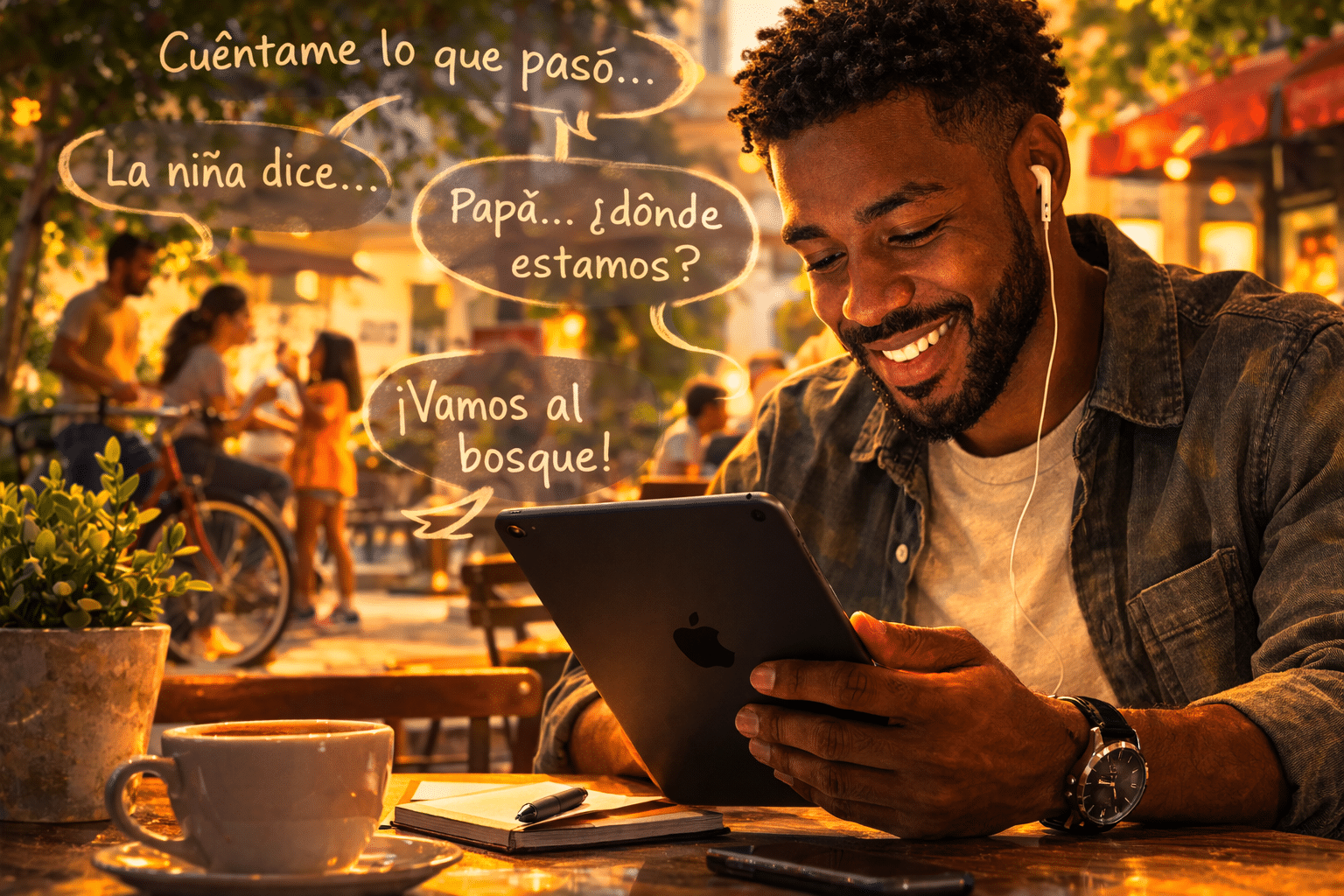
If you’ve tried learning Spanish before, you may have experienced a familiar pattern. You start a course, work through the lessons, and study the vocabulary. But after a while, the process begins to feel heavy.
You’re memorizing rules, completing exercises, and trying to keep track of grammar structures — yet the language still doesn’t feel natural.
This is one reason many people search for Spanish lessons online hoping to find something more flexible or engaging. But often, the format stays the same. The lessons may be digital, but the structure still centers on rules, drills, and explanations.
Stories introduce a very different way to experience Spanish — one that often feels easier, more intuitive, and more enjoyable.
Why Traditional Lessons Can Feel Overwhelming
Traditional language courses usually follow a step-by-step structure.
First, a grammar concept is introduced.
Then you see example sentences.
Finally, you complete exercises designed to reinforce the rule.
While this approach works for some learners, it can also create cognitive overload.
Instead of focusing on meaning, your brain is trying to manage multiple tasks at once:
Understanding new vocabulary
Remembering grammar rules
Analyzing sentence structure
Checking whether your answer is correct
This constant mental juggling can make learning feel exhausting. Even when progress is happening, it may not feel natural or satisfying.
For many adult learners, this structure is one of the biggest barriers to staying consistent.
How Stories Reduce Cognitive Overload
Stories change the learning experience because they shift the brain’s focus from rules to meaning.
When you follow a story, your attention naturally moves toward understanding what’s happening.
Who are the characters?
What problem are they facing?
Where are they going next?
Because the focus stays on the narrative, your brain processes the language more smoothly.
Instead of analyzing every sentence, you begin recognizing patterns through repetition and context.
This is why many learners discover they can learn Spanish through stories with less mental effort than they experience in traditional lessons.
The language feels connected rather than fragmented.
Context Makes Language Easier to Understand
Another reason stories feel easier is that they provide context.
In many traditional exercises, sentences appear on their own, disconnected from any larger situation. You may understand the grammar, but the sentence itself doesn’t feel meaningful.
Stories solve this problem.
Every sentence is part of a larger moment. Words connect to characters, actions, and emotions.
Because the brain naturally remembers meaningful situations better than isolated information, vocabulary and structures become easier to retain.
You’re not memorizing phrases — you’re following events.
Repetition Happens Naturally in Stories
One of the most powerful elements of story-based learning is repetition.
In traditional courses, repetition often appears as drills or exercises. These can feel mechanical and tiring.
Stories create repetition in a much more natural way.
Characters repeat certain phrases. Situations echo earlier events. Key vocabulary appears again as the narrative unfolds.
Because this repetition is tied to meaning, it reinforces learning without feeling repetitive.
The brain begins recognizing familiar words and patterns automatically.
Stories Keep the Brain Curious
Another advantage of narrative learning is curiosity.
When you’re following a story, you want to know what happens next. That curiosity keeps your attention engaged.
Instead of studying because you feel you should, you continue reading or listening because the story pulls you forward.
This simple psychological shift makes learning far more sustainable.
Consistency is one of the most important factors in language acquisition. When learning feels interesting instead of forced, learners are far more likely to return to it regularly.
A Different Way to Experience Spanish
Story-based learning doesn’t eliminate structure. Well-designed stories still introduce vocabulary gradually and repeat important language patterns.
But instead of presenting language as a set of rules to memorize, stories present Spanish as something to experience.
This approach allows learners to absorb the rhythm and flow of the language while staying focused on meaning.
If you’d like to explore this type of learning, you can browse Spanish learning stories.
You can also learn more about the philosophy behind this method and how narrative exposure supports language learning by visiting our learning approach.
Final Thoughts
Traditional lessons and grammar explanations can certainly play a role in learning Spanish. But they don’t have to be the starting point.
For many learners, beginning with stories creates a more natural and enjoyable path.
Stories reduce cognitive overload, provide meaningful context, and introduce repetition in a way that feels engaging rather than mechanical.
When learning feels easier, it becomes easier to stay consistent. And with consistent exposure, Spanish gradually becomes something you understand — not something you struggle to decode.
For many learners, that shift makes all the difference.




Comments (0)
DejarUn Comentario