

Spanish Reading Practice for Adults Who Want Real Progress
Learning Spanish as an adult often comes with a frustrating question: What should I actually read?
Many learners know that reading can help improve vocabulary, comprehension, and confidence. The problem is that most reading materials are either too difficult, too boring, or simply not designed for language learners.
If you’ve ever opened a Spanish novel, tried reading a newspaper article, or searched for random content online only to feel overwhelmed, you’re not alone. Effective spanish reading practice isn’t about reading anything in Spanish. It’s about reading material that helps you understand, enjoy, and continue learning.
Why Native Content Can Be Too Difficult
One of the biggest mistakes adult learners make is jumping straight into content written for native speakers.
A novel may contain thousands of unfamiliar words. News articles often use advanced vocabulary, cultural references, and complex sentence structures. Even social media posts can be confusing because they rely on slang and context that learners may not understand.
When reading becomes a constant exercise in looking up words, comprehension disappears.
Instead of building confidence, many learners end up feeling discouraged.
Good spanish reading practice should challenge you without overwhelming you. The goal is to understand enough of what you’re reading that your brain can begin recognizing patterns naturally.
The Power of Reading Stories Designed for Learners
Stories written specifically for language learners create a very different experience.
The vocabulary is more controlled. The sentence structures are easier to follow. Most importantly, the story itself provides context.
When you encounter a new word in a meaningful situation, it’s much easier to understand and remember than when you see it on a vocabulary list.
This is one reason so many people choose to learn spanish through stories. Rather than memorizing isolated words, learners see language used in conversations, descriptions, and real-life situations.
Stories also create a natural reason to keep reading. You’re not studying because you have to. You’re reading because you want to know what happens next.
If you’re looking for reading material designed specifically for learners, explore a collection of story-based content here.
Why Reading and Listening Together Works So Well
Reading becomes even more effective when combined with audio.
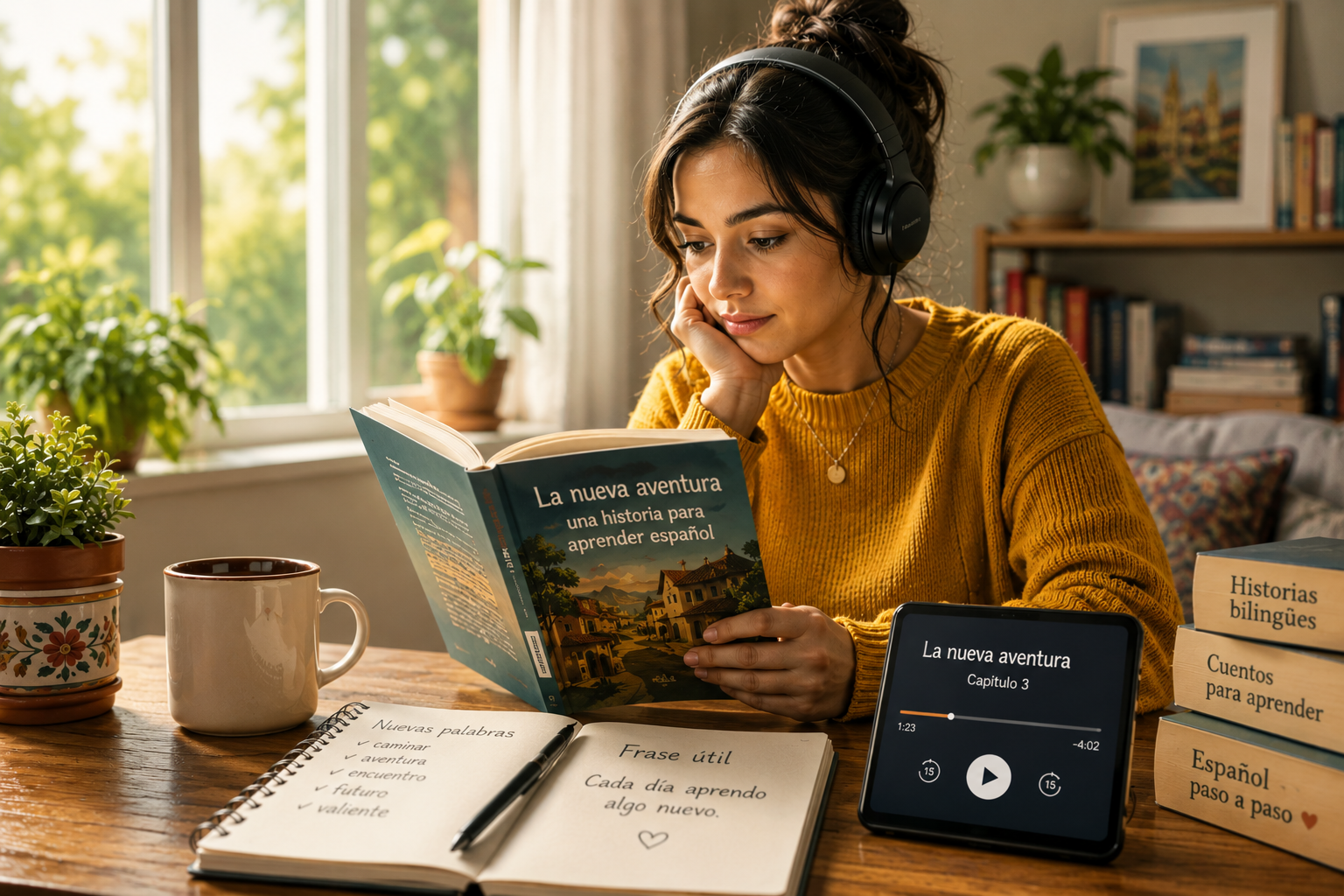
When you see the words and hear them at the same time, you’re training multiple language skills simultaneously. Your brain begins connecting spelling, pronunciation, vocabulary, and meaning in a single experience.
This approach helps learners develop comprehension more naturally than reading alone.
Many people discover that listening while reading also makes it easier to stay focused. Instead of stopping constantly to translate every word, they begin following the story and understanding the language through context.
Platforms like Dual Language Stories focus on combining reading and listening through bilingual stories, allowing learners to build comprehension gradually without relying on traditional textbook exercises.
Why Bilingual Stories Reduce Frustration
Another challenge adults face is uncertainty.
When reading entirely in Spanish, learners often wonder whether they actually understand what they’re reading.
This is where bilingual spanish english stories can be especially useful.
Having access to both languages reduces anxiety and helps learners confirm meaning without constantly searching for translations online. Instead of getting stuck on a single sentence, readers can keep moving through the story.
Over time, many learners find they rely less on the English support and spend more time reading directly in Spanish.
The goal isn’t to depend on translation forever. The goal is to make reading enjoyable enough that you continue doing it consistently.
Start with Material You Can Actually Enjoy
Many adults believe they need to read difficult content to make progress.
In reality, consistency matters far more than difficulty.
Reading a few easy spanish stories every week will usually produce better results than struggling through a novel that feels impossible to understand.
When reading feels enjoyable, you return to it more often. That regular exposure helps vocabulary, sentence patterns, and comprehension develop naturally over time.
If you’re curious about trying story-based learning for yourself, a free collection of beginner-friendly stories can be a great place to start.
Conclusion
The best spanish reading practice isn’t necessarily the most difficult material you can find. It’s the material you’ll actually read consistently.
Stories designed for learners provide the right balance of challenge, comprehension, and enjoyment. When combined with audio, context, and gradual repetition, they create an experience that feels much more natural than traditional study methods.
Choose reading material that keeps you engaged, focus on understanding before memorization, and make stories part of your regular routine. Small amounts of enjoyable exposure, repeated over time, can lead to surprisingly meaningful progress.




Comments (0)
DejarUn Comentario