


Language Learning via the Active Reading Method
Language acquisition through contextual learning is the best way to learn Spanish. While reading stories with their translation feels extremely productive, your method may still be missing out a little. There’s more you or your child can do beyond passive reading that makes your learning journey more effective. Merely reading bilingual Spanish stories with their translations might not lead to productive language acquisition. The difference between this and active readers is that of methodology. Your methodology is your key to successfully learning a new language. Active reading methods are faster in building vocabulary and developing good comprehension skills. This is how you do it.
Active Reading Methods
This is how you best utilise your Spanish stories with English translation!
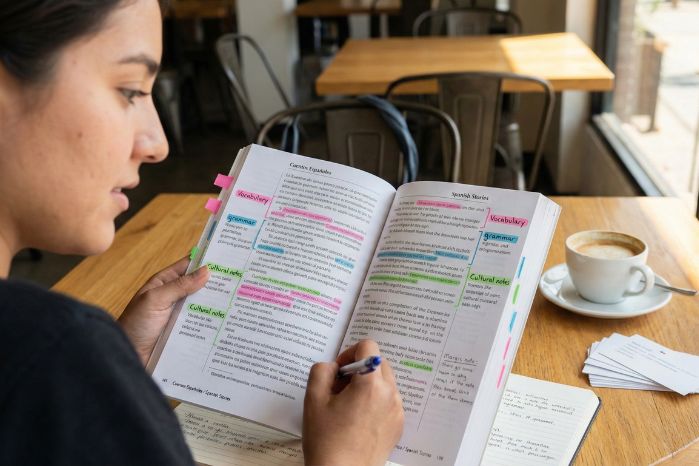
Annotations
A technique even T.S. Eliot has used to read texts, smart annotation is your best way to learn a language. Creating a personalised record of learning takes your learning beyond your reading session. This is the best way to learn Spanish.
You can develop your own personalised colour codes. For example, highlighting new vocabulary in pink, repeated words that you forgot in red, grammar patterns in blue and cultural references in green. This visualisation of your notes will help you create a mental picture that you reference when you think of the language later. Writing notes on the margins in your target language also helps with writing practice! Jotting down the difference between literal and cultural translations is a great way to start this. You’re writing about the language, in the language. You can also mark vocabulary that you would like to incorporate into your own speech pattern!
Fluency and Utility Tests
When you’re learning a new language through Spanish stories with English translation, not every word can have equal attention. This is where you apply the utility and fluency test. Prioritise words that repeat in the story, words that you have encountered before as well. Notice the context and usage of that particular word. Eventually, you will be able to form groups of words that have similar meaning but different semantic parameters. These are words in the same semantic family. You can use these words in your annotation further. This is a solid way to learn a language that works the fastest for adults! Children can take help from an adult to form this list. It helps in cognitive development.
Conclusion
Active reading methods will help you learn Spanish the fastest! Visit the incredible Free 4-Story Pack offers to begin reading engaging Spanish stories with English translation!




Starting Spanish with Your Ears, Not a Textbook
[…] Also Read: Language Learning via the Active Reading Method […]